
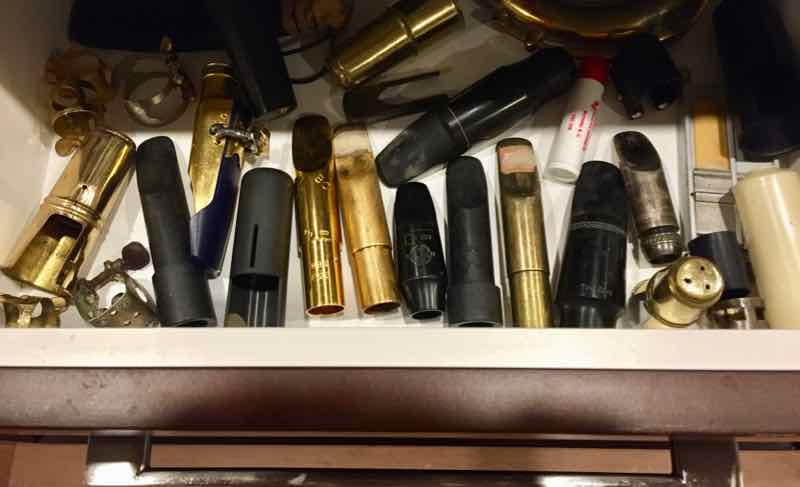
Your saxophone mouthpiece is an integral part of what forms your entire sound. That, along with the reed and your embouchure, the saxophone itself is almost secondary at this point. I can honestly tell you that our saxophone mouthpieces are the most important and influential part of our setup (equipment) that can alter your own personal sound… for better or for worse! More so than your reed or saxophone.
Some saxophone players will spend many years, even a life time playing on just one. Then there are others who will have a box full of saxophone mouthpieces. Personally, I tried quite a few during the first several years of playing. After about 10 years or so I found one I fell in love with and have been playing it for over 30 years now.
If you’re just starting out, you probably haven’t given this subject much thought if any. Maybe you’re stuck with whatever mouthpiece came with the sax you got. It may be one of the highly recommended ones or it may be terrible and liable to give you problems going forward. It’s time to figure this out!
What’s the obsession with saxophone mouthpieces anyway?
Well, like I mentioned earlier, it’s the one piece of our set up that can give us the “biggest bang for the buck”. So, I suppose those who aren’t happy with their sound will keep on searching in hopes the mouthpiece will help make the change they’re looking for. A mouthpiece designed a certain way can help us sound big, bright and loud. A different design can help us sound much darker and not as loud. As you continue to grow with your playing, be thoughtful of the type of sound you want to produce. You will choose your next mouthpiece depending on which “sound” direction you want to go in.
The saxophone is capable of a wide range of styles and sounds. Everyone who approaches it will eventually fall into a category, whether it’s a soft jazzy sound, soulful and bluesy, raunchy rock and roll or a dark and focused classical sound. There is a mouthpiece model that will help you to achieve it. But the biggest influencer on your sound will be you. Since we’re all physically different, no mouthpiece will work the same for everyone.
Your Physical Body is a Factor
Our unique physical shape and structure of our face, bone structure, teeth, size and thickness of the lips all have an influence. Add to that, our command or control over the instrument, air support, embouchure, and oral cavity. Because we are all so different, these physical things have an effect on the way our saxophone sounds, regardless of any equipment. This is one of the beautiful things about this instrument. So keep this in mind as you go.
The beginning saxophone student should start with a recommended size (see below) and use it for the first several weeks or months of study. Progress and self evaluation will dictate the next step to take. A beginner will have a hard time blowing a wide tip, but to get a bigger sound that’s exactly what’s needed. So to get there will require some time, and everyone moves at a different pace.
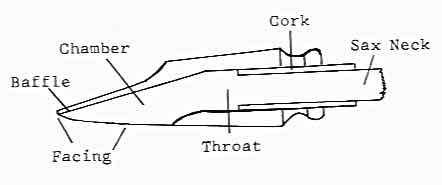 The most important parts of the mouthpiece are:
- Tip Opening
- The Facing
- The Baffle
- The Chamber
Mouthpiece Tip Opening
The tip opening is the distance between the very tip end of the mouthpiece and the reed tip when it sits in place on the facing. This is measured in thousands of an inch. So, a 90 would be more closed opening than a 120. It’s common to see these measurements displayed in numbers and even sometimes accompanied by a star; 8*.
Most mouthpiece makers use a numbering system to identify the range of the tip opening. A wide tip opening will give you a brighter, bigger sound but is harder to play as it requires more air to make the reed vibrate. A narrow opening is much easier to blow but gives a darker, more closed sound. For the beginner though, any extreme in this opening range will make it more difficult to blow and produce a good, steady tone. It’s best for you to choose an upper low to a medium tip opening during your first few months of study. So, between a range of 3 to 10 choose a 4 or 5 at the most.
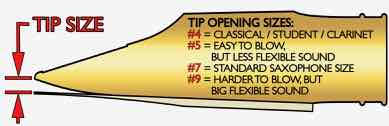
[image courtesy of Theo Wanne]
The facing being of the most importance when talking about the tip opening as mentioned earlier. This is what dictates the distance between the reed and the tip of the mouthpiece. The length of the facing is that distance where the reed leaves the flat table of the mouthpiece to the tip. If the facing is long, it will be harder to control because more lip pressure is needed to close the reed to where it needs to be to vibrate properly.
The problem with a short facing is that it makes it harder to control with our embouchure. So, although this size would be easier to control than a long facing, it will lack a full dynamic range in tone. This could mean having weaker control of the low notes and make them break. The higher notes could sound thinner as well.
The Chamber – Look for a smaller chamber.
This is where the sound resonates in the mouthpiece. A small chamber going right into the mouthpipe will produce a larger and brighter sound than a large chamber. When considering the walls of the chamber as well, it’s only fair to say that manufacturers have many variations available when designing the chamber, many of which shouldn’t concern the beginner.
The Baffle – Look for a medium size baffle.
Right behind the tip is the baffle. As your sound leaves the reed it hits this baffle area first. A high baffle will leave less space between the reed and mouthpiece, sometimes causing squeaks quite easily. It can also help to produce a brighter sound. A low baffle leaves more space and if too extreme can make it harder to blow. A player looking for a darker sound will choose a low baffle mouthpiece.
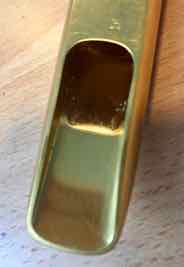
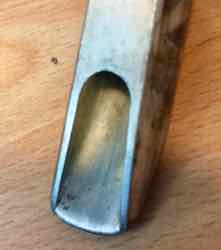
The image on the left is an example of a mouthpiece with a high baffle. Notice how it starts high right from the tip then about half way down drops off sharply into the chamber. The image on the righ shows a mouthpice with a low baffle. Notice how it has no drastic drop off into the chamber. Just a gradual and smooth transition.
When I studied “legitimate” music at the University of British Columbia I was encouraged to produce a more “classical” sound. My teacher recommended a Selmer “Larry Teal” mouthpiece. It’s one of the two I demonstrate in the video below. Later on, to get a more versatile all-round sound I experimented with a very popular model, an Otto Link “Tone Edge”. This is the other mouthpiece I used in the demo.
Check out the video below. I demonstrate two hard rubber mouthpieces. One has a smaller tip opening and a low baffle, the other has a wider tip opening with a slightly different baffle design. See if you can hear the differences, and if so, which one you like best.
3 Recommended Mouthpieces For The Beginner
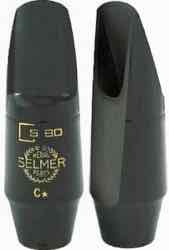 Selmer S80 series
Selmer’s S80 series are an excellent line of hard rubber mouthpieces. More specifically, the Selmer S80 C* is generally regarded as one of the best choices for starting out on and even taking you to the next stage during your first year or two of playing.
- C
- C*
- C**
- D
- E
- F
Yamaha C series
The Yamaha C (Custom) series saxophone mouthpieces. The tip opening gets wider as the numbers increase:
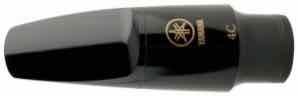 3C
3C- 4C
- 5C
- 6C
- 7C
As the number increase so does the tip opening. The best way to decide which is right for you would be to try a few out at a music store. If this is not possible go with the 4C as a good bet.
Vandoren
Vandoren is a well established company known for it’s saxophone reeds and mouthpieces. They produce many models of hard rubber mouthpieces for jazz and classical and everything in between. For a beginner you should look at their Optimum series which include:
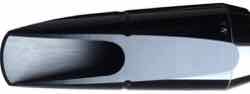 AL3
AL3- AL4
- AL5
The AL 3 being the smallest tip opening and quite possibly the easiest to play. Also, potentially the smallest tone.
Anyone of these brands will be a good choice for you at the beginning of your quest. If you have a different brand, that can be ok too, as long as it’s a small to medium opening. But remember, too small a tip opening can “choke” your tone.
If you are lucky enough to test drive a few at a local music store, make sure you bring along several reeds. Certain reed brands and sizes fit slightly different on a mouthpiece, depending on it’s width and tip. Learn more about your next most important piece of saxophone knowledge; the saxophone reed.
Other Recommendations Specifically For Alto Sax are:
Meyer – look for the MR or G series. These are long-time classic alto mouthpieces used by many players such as Paul Desmond who recorded Take Five.
Claude Lakey – they make ebonite, brass and metal. The one in the video is the “aluminum” metal model
Both these mouthpieces are featured in the video below:
The Material
There are several different materials used to make saxophone mouthpieces. The most common ones are hard rubber (ebonite) and metal. Carbon fiber is also starting to be popular among a few manufacturers. There’s also some made of wood, plastic and even glass, but these are not as popular.
The Hard Rubber Mouthpiece
The hard rubber, or ebonite mouthpiece is really the standard and most popular. The material is quite tough but at the same time can be refaced if needed. Like any mouthpiece though, care is needed so as not to damage the facing or tip from dropping or bumping it. The slightest dent, chip, or crack would have a major effect on it’s performance as the reed would not be aligned properly.
Daily care – You should wipe your mouthpiece dry, inside and out after each use with a soft cloth. Also, every once in a while, washing it with soap and warm water is a good idea. Because of saliva, it can be a breeding ground for germs. Calcified sediments can collect inside the chamber. A buildup of this can be very difficult, if not impossible to remove if allowed to grow for long periods of time.
Which Material is Best For You?
When starting out it’s best to play on a hard rubber mouthpiece. They are easier to play than a metal one at this point. The difference in sound between a hard rubber and metal piece can be big later on in your development but not at the beginning stages so don’t consider a metal one at least for a while.
Metal Saxophone Mouthpieces
Metal saxophone mouthpieces came into existence long after the hard rubber type. It was Otto Link in the early 1930’s that introduced the first model. Jazz players took to it immediately. There was obviously a difference in sound with Otto Link’s new design. Classical saxophonists did not take to the new metal mouthpieces.
The metal sound vs the hard rubber sound
Some people think there’s a difference in sound and others don’t. The argument being that if there is a difference it’s in the design of the mouthpiece, such as the baffle shape, along with the tip opening and chamber. Not the material from which it’s made.
An advantage of metal mouthpieces is that because the material is stronger, the piece itself doesn’t need to be as thick. For tenor and bari saxes this is especially desirable because they can feel much slimmer or narrower. For many players this feel is preferable to a fatter, wider one. For me it’s a matter of more control and comfort.
Metal vs FiberCarbon Comparison – Is there a difference?
One of the non-metal materials that is being used to make mouthpieces comes from a product called Fiberrod. This is a carbon fiber material that’s been around for a long time in other industries. As for the saxophone mouthpiece industry, they say it’s comparable in sound to a hard rubber mouthpiece. The fiberrod being favored by some, including Theo Wanne and Nadir Ibrahimoglu who is making the Guardala mouthpieces.
I own one of these FiberCarbon mouthpieces and so I made the comparison video below.
The thing about this comparison is that both these saxophone mouthpieces are the exact same model and design. The only difference is in the material they are made from. The first one is a Guardala MBII Fatboy made out of metal and gold plated. Most metal mouthpieces are either gold or silver plated. The second piece is also a Guardala MBII Fatboy made out of fiber carbon. It’s comparable to ebonite but it’s ultra light and tougher, and less expensive. I suppose this is why some manufacturers have taken to it. When held in your hand you can hardy feel it’s there. See if you can hear any difference:
So whether you hear a difference in sound or not, there are other things to consider between a metal vs an ebonite, or fiber carbon or whatever. The price. Metal ones will always cost more because of the material (metal) being more expensive and the plating, whether gold or silver will add more to the overall cost as well. The other thing is the metal ones will probably be more durable and tougher. This is not to say you can’t damage one, but in general it will be tougher.
Should a beginner play on a metal mouthpiece?
I would say no. I’d stick to one of the top three recommendations above; Selmer, Yamaha, or Vandoren. This would be the best way to ensure your embouchure is well enough developed before moving on to any mouthpiece, metal or ebonite. After that time period, say a year or two. Depending on how quickly you progress, it may very well be time to try something a bit different in design. This should happen at some point in order to keep developing your sound.
Some Popular Metal Mouthpiece Brands
There’s so many of these out there today so it’s impossible to include them all in an article like this. So I’ve chosen a few that have been around for decades and are still popular today. Also, I have personal experiences with these so I can at least give you my honest opinion of them.
Berg Larsen
The Berg was one of the first metal mouthpieces I owned. Back then, in the mid 1970’s there were really only a handful of saxophone metal mouthpieces on the market. The Berg is a very slim design and this is really apparent when you switch over from a more typical bigger, fatter hard rubber model. I liked this slimmer feel, although later I found it too slim compared to other models I tried later.
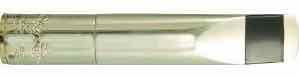
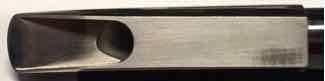
Berg Larsen are mostly known for their metal mouthpieces although they do make several hard rubber models too. They’re made for soprano, alto, tenor, and baritone. The metal ones are actually made from stainless steel. You feel great control with a Berg Larsen metal mouthpiece. They’re a little more slender than other makes and so give a more distinct sound and feel.
The Berg Larsen Measuring System looks like this:
- 115/0
- 110/1
- 90/2
The tip opening is measured with numbers from 90 to 130… 90 being very closed and 130 being very opened. The chamber size is measured from 0 to 3… 0 being a smaller chamber opening giving you an edgier tone and 3 being a larger chamber opening giving you a mellower tone.
So a Berg Larsen mouthpiece that falls into a “medium” would have the numbers 115/1 or 115/2. This means a medium tip opening because the closed is a 90 and the widest opening is 130, so 115 falls right in the middle. The 1 and 2 chamber size is in the middle of 0 and 3.
Dukoff
Bobby Dukoff started making his mouthpieces in the 1940’s. Bobby was a well-know sax player back then. He finally settled in Florida during the 1970’s. This is around the time he created his now famous D model mouthpiece. This is the one I owned and played for a couple of years. I really loved it at the time. David Sanborn played one on his alto and Kenny G played one on his soprano.
Bobby Dukoff expanded into a few more models in later decades with the L, M and X models. He altered the chamber and baffle size and shape to appeal to a wider range of players. Probably because his D model was so bright and loud. I liked this but there’s many who go for a darker sound. All models have a numbering system which relates to the tip opening size: 6*, 7*, 8* etc.
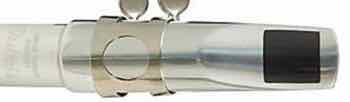
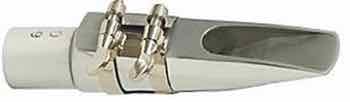
Dukoff models:
D model – The D model has a high baffle with a deep chamber which gives it a bright sound. It is characterized by focused projection, a huge mixture of overtones, and deep rich color. It’s the typical Dukoff sound that was originally made in the 1970’s.
L model – The L model is a later creation that goes quite opposite to the D in that it has a darker sound.
M model – This model is more of a combination of the D and L models. It’s on the darker side but not as dark as the L model and it has some brightness but not to the extent of the D model.
X model – The X model is the least brightes and probably sounds the darkest of all.
Otto Link
The Otto Link is one of the most popular and influential metal mouthpieces in history. The man, Otto Link started making his pieces in the 1920’s with fellow craftsman Frank Meyer. Yes that is the guy that’s known for the Meyer mouthpieces.
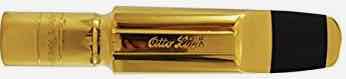
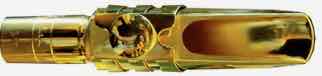
Otto link probably created more designs/models than anyone else in this industry. He was always trying to fill a niche for many individual tastes. Although I had one during my first few years of playing, I certainly don’t pretend to be an authority on these. The best authority on Otto Links in my opinion is Theo Wanne. Not only is he one of the very top mouthpiece designers and makers living today, Theo truly understands these mouthpieces and why they have been so popular and so has used them as models for inspiration in creating his own mouthpieces.
Guardala
Dave Guardala gained massive success and popularity during the 1980’s. Mainly because he was Michael Brecker’s mouthpiece maker. It was the Michael Brecker model (MBI) that really did it for him. This was my next mouthpiece after the Berg and Dukoff and Otto Link.
Below are some poplar models. I did a comparison video using four of these Guardala mouthpieces here.
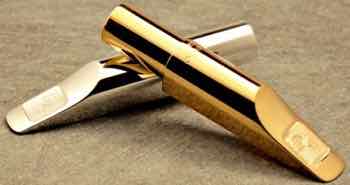
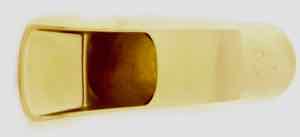
Guardala models:
MBI (Michael Brecker original) – this is the one that started it all for Dave Guardala
MBII – an alternate baffle design of the MBI
MBII Fatboy – an alternate bigger, fatter design of the MBII
King – brighter sound, named after rock & roll legend King Curtis
Crescent – darker, designed for the Coltrane sound
Wanne
As you probably know by now, my favorite mouthpiece is a Guardala Michael Brecker model. I must admit that it was a Theo Wanne piece that came the closest to make me actually think I could change. I did get the Durga model and still have it to play occasionally. They feel good and there are several models to choose from in all four of the most popular saxes: soprano, alto, tenor and bari.
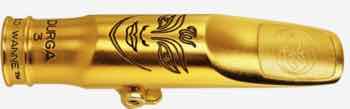
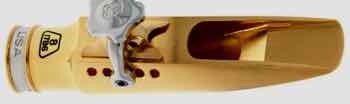
Theo Wanne mouthpiece models:
Ambika – this is the darkest sounding of the Wanne metal mouthpieces
Gaia – this is Theo’s improved version of the classic Otto Link jazz sound
Durga – this is big and bright. Similar to some Guardala Brecker models
Mantra – this is the Wanne “right in the middle” versatile sounding piece
Shiva – this is the brightest of his models


Very interesting article Johnny, didn’t know metal mouth pieces came out in the 1930’s – thanks for sharing
Another comment, i bought a metal guardala alto king mouthpiece (nadir) years ago,
i used to take it out every so often , play it and put it away. No it didn’t feel right.
I agree with what you say, there is a time in your playing, further down the line, when you take to a metal mouthpiece. It’s taken me nearly 4 years, now i’ve finaly taken to metal. I wouldn’t swap my guatdala for a different metal mouthpiece.
Just change the reed types and i have a lot of different tones and responses.
Hi Johnny. Thanks again for the great site. As you know I have purchased the MBII FatBoy. I use a Fribrecell 3 1/2 reed on it with a Rovner Versa ligature. I was playing at a Blues jam night and someone came from the crowd to talk with me. They said I have a very similar sound as King Curtis. That, was an awesome compliment so say the least. I would not trade to another mouthpiece and wish I had this one years ago from the Berg Larsen 120/2 that I played. Thanks again for all the great info and techniques. Rick
Hi Johnny,
This is the best detailed information on mouthpieces I’ve ever seen. A gold mine of precious details. Your advice just comforts me in my choice. I think I am now ready to try a few out at a music store. A big thanks !
Stan
Hello, How is your hand? Time will heal.